
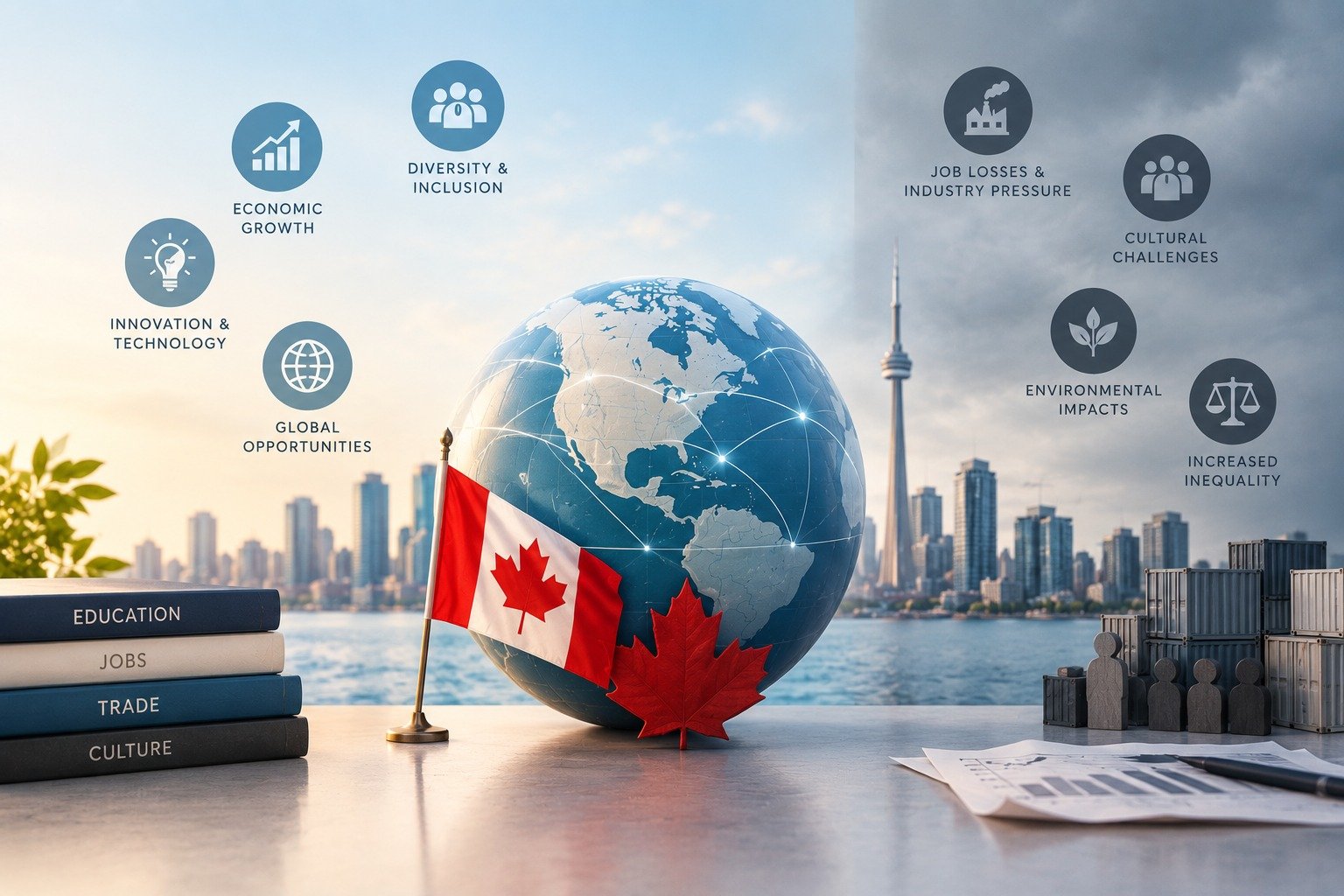
Globalization plays a major role in Canada’s economy, education system, and job market. It refers to the increasing connection between countries through trade, technology, communication, investment, and cultural exchange. In today’s interconnected world, Canadian businesses work with international partners, students access global learning opportunities, and consumers purchase products from around the world.
While globalization creates many opportunities, it also presents challenges. Understanding both the positive and negative impacts of globalization in Canada helps students, professionals, and businesses prepare for an evolving global economy.
What Is Globalization?
Globalization is the process through which countries, businesses, and people become more connected. These connections occur through international trade, digital technology, transportation, education, and the movement of people and ideas across borders.
For example, a Canadian company may design a product locally, source materials from different countries, use software developed overseas, and sell the finished product to customers worldwide. This is globalization in action.
Positive Impacts of Globalization in Canada
1. Increased International Trade Opportunities
One of the biggest advantages of globalization is access to international markets. Canadian businesses can sell products and services beyond the country’s borders, helping them reach more customers and generate greater revenue.
Industries such as technology, manufacturing, agriculture, energy, tourism, and financial services benefit significantly from global trade. Expanding into international markets creates employment opportunities and contributes to economic growth.
2. Access to New Technology and Innovation
Globalization allows Canadian businesses and educational institutions to access new technologies, research, and innovations from around the world.
Advancements in artificial intelligence, cybersecurity, biotechnology, data analytics, and telecommunications often spread quickly through international collaboration. As a result, Canadian organizations can improve efficiency, develop better products, and remain competitive in global markets.
Students also benefit from exposure to modern technologies and global knowledge, helping them build skills that employers value.
3. More Educational Opportunities
Globalization has transformed education by providing access to international learning resources, online courses, research databases, and global academic networks.
Canada is also a popular destination for international students, creating diverse learning environments where students gain exposure to different cultures and perspectives. This cultural diversity enhances communication skills and prepares graduates for international workplaces.
4. Greater Consumer Choice
Canadian consumers have access to a wide variety of products and services from around the world. Whether purchasing electronics, clothing, software, food products, or online services, globalization provides more options than ever before.
Competition between international businesses often encourages innovation, improved quality, and better customer service, benefiting consumers across Canada.
5. Cultural Exchange and Diversity
Canada is known for its multicultural society. Globalization encourages cultural exchange through travel, education, immigration, entertainment, and digital communication.
People gain exposure to different traditions, languages, and perspectives, helping create more inclusive communities. In today’s workplace, the ability to communicate and collaborate with people from diverse backgrounds is an important professional skill.
Negative Impacts of Globalization in Canada
1. Increased Competition for Businesses and Workers
While globalization creates opportunities, it also increases competition. Canadian companies often compete with businesses from countries where production costs may be lower.
As industries adapt to international competition, some jobs may change, move to other locations, or require new skills. Workers who do not adapt to changing industry demands may face challenges in the labour market.
2. Supply Chain Vulnerabilities
Modern businesses depend heavily on global supply chains. Products and materials often move across multiple countries before reaching consumers.
Events such as transportation disruptions, trade disputes, natural disasters, or global crises can affect product availability and increase costs. The COVID-19 pandemic demonstrated how disruptions in one region can impact businesses and consumers worldwide.
3. Unequal Economic Benefits
The benefits of globalization are not always distributed equally. Some industries, businesses, and regions may experience strong growth, while others face challenges adapting to changing market conditions.
Communities that depend heavily on a single industry may be more vulnerable to international economic changes. This is why education, workforce development, and skills training remain important in a global economy.
4. Environmental Concerns
International trade requires transportation, manufacturing, and resource consumption, which can contribute to environmental challenges.
Shipping products across long distances increases energy use and greenhouse gas emissions. At the same time, globalization can support the development and sharing of clean technologies that help address environmental issues.
The overall impact depends on how businesses, governments, and consumers balance economic growth with sustainability.
5. Pressure on Local Culture
Global entertainment, brands, and digital platforms have a strong influence worldwide. While cultural exchange offers many benefits, some people worry that local traditions, languages, and cultural identities may receive less attention.
Canada continues to support its cultural industries and creative sectors to help preserve and promote Canadian voices in an increasingly connected world.
How Globalization Affects Students
Students entering today’s workforce are directly influenced by globalization. Employers increasingly seek graduates who can adapt to changing technologies, communicate effectively, and work in diverse environments.
Important skills for success include:
- Digital literacy
- Communication skills
- Critical thinking
- Problem-solving
- Adaptability
- Teamwork
- Data analysis
- Cross-cultural communication
These skills help graduates remain competitive in industries that operate on a global scale.
Career Opportunities Created by Globalization
Globalization has created demand for professionals in many growing fields, including:
- International Business
- Global Supply Chain Management
- Logistics and Operations
- Cyber Security
- Digital Marketing
- Data Analytics
- Project Management
As businesses expand internationally, professionals who understand global markets, technology, and cross-border operations are increasingly valuable.
Final Thoughts
Globalization has both positive and negative impacts on Canada. It creates opportunities through international trade, innovation, education, cultural exchange, and career growth. At the same time, it presents challenges related to competition, supply chain risks, environmental concerns, and economic inequality.
For students, understanding globalization is essential because it influences the skills employers seek and the opportunities available in the modern workforce. As the global economy continues to evolve, individuals who combine technical knowledge with adaptability and strong communication skills will be better prepared for future success.
Prepare for a Global Career with Beta College
At Beta College, students can develop practical skills for today’s interconnected world through programs such as International Business Management, Global Supply Chain Management, and Cyber Security. These career-focused programs help students build industry-relevant knowledge and prepare for opportunities in Canada’s growing and globally connected economy.