
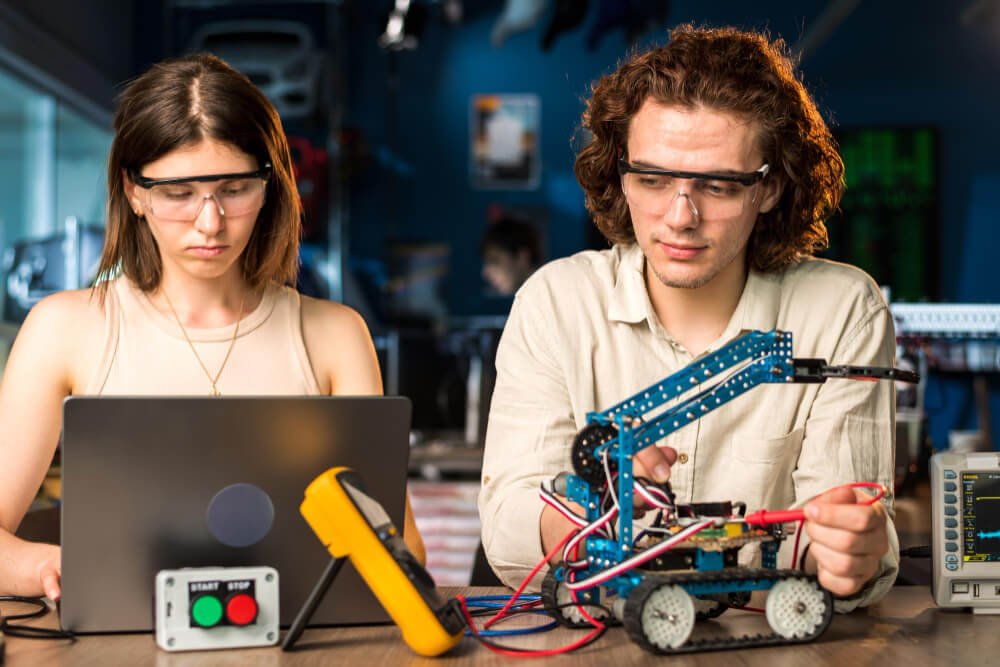
In today’s rapidly evolving world, STEM an acronym for Science, Technology, Engineering, and Mathematic is more than just an educational framework. It is the foundation of innovation, economic growth, and problem-solving. From the smartphones in our hands to the satellites orbiting Earth, STEM is everywhere, shaping the way we live, learn, and connect.
Governments, educators, and industries are increasingly prioritizing STEM education because it equips learners with the skills to tackle global challenges be it climate change, healthcare innovation, or artificial intelligence. For students, a strong background in STEM isn’t just about landing a high-paying job; it’s about contributing meaningfully to society and shaping the future.
Understanding STEM: Beyond the Acronym
While the word STEM might conjure images of laboratories and coding marathons, it’s much broader in scope.
- Science helps us understand natural phenomena and fuels medical discoveries.
- Technology drives everything from social media platforms to cybersecurity.
- Engineering builds bridges, designs sustainable cities, and innovates transportation.
- Mathematics underpins algorithms, financial systems, and data analytics.
Together, STEM is not only academic it is practical, creative, and deeply integrated into our everyday lives.
The Growing Importance of STEM Education
1. Meeting Global Skill Demands
The World Economic Forum highlights that by 2030, over 85% of jobs will require STEM-related skills. Automation, AI, and robotics are reshaping industries, and countries that prioritize STEM education are more likely to stay competitive.
2. Fostering Innovation and Creativity
Contrary to the stereotype that STEM is only logical and rigid, it is a space of immense creativity. Engineers imagine futuristic transport systems, scientists develop life-saving drugs, and tech innovators create tools that revolutionize communication.
3. Bridging the Gender Gap
For decades, STEM fields were dominated by men. Today, educators and policymakers are encouraging more girls to pursue STEM careers. Gender diversity not only ensures equal opportunity but also brings new perspectives to innovation.
STEM Education in Schools: Building the Foundation
Early exposure to STEM learning is crucial. Schools worldwide are integrating hands-on experiments, coding classes, and robotics clubs to make STEM exciting.
- Project-Based Learning (PBL): Students solve real-world problems, such as designing eco-friendly homes.
- Digital Literacy: With technology embedded in every field, digital skills are as essential as reading and writing.
- Collaboration and Critical Thinking: STEM education teaches teamwork, communication, and analytical reasoning skills needed in all careers.
By nurturing curiosity from a young age, schools prepare students not just to pass exams but to become lifelong problem-solvers.
Higher Education and Advanced STEM Programs
Universities are at the heart of STEM research and development. Programs in biotechnology, data science, renewable energy, and aerospace engineering are producing graduates ready to tackle global issues.
- Research Opportunities: Students engage in real-world projects, from renewable energy prototypes to AI-driven healthcare solutions.
- Industry Collaboration: Many universities partner with tech giants, giving students direct exposure to career opportunities.
- Global Perspective: STEM education increasingly emphasizes cross-border collaboration, as issues like climate change require collective solutions.
The Role of STEM in Career Growth
1. High Demand, High Rewards
STEM careers are consistently ranked among the highest-paying professions worldwide. Software developers, data scientists, and biomedical engineers are not only in demand but also enjoy job stability.
2. Versatility Across Industries
A degree in STEM doesn’t limit one to a laboratory. It opens doors to industries like:
- Healthcare: Medical technology, biotechnology, pharmaceuticals.
- Finance: Data analytics, risk modeling, fintech innovation.
- Aerospace: Drone technology, space exploration.
- Sustainability: Renewable energy, smart cities, environmental conservation.
3. Entrepreneurial Opportunities
STEM professionals often create startups think of innovators behind companies like SpaceX, Tesla, or biotech firms. Their expertise allows them to turn ideas into impactful ventures.
STEM Careers That Are Shaping the Future
Here are some fast-growing STEM career paths making headlines:
- Artificial Intelligence Specialist – Developing smart systems that mimic human intelligence.
- Data Scientist – Analyzing big data to guide business and policy decisions.
- Robotics Engineer – Designing machines that assist in healthcare, manufacturing, and daily life.
- Biotechnologist – Innovating in genetics, agriculture, and medicine.
- Cybersecurity Expert – Protecting critical systems in an increasingly digital world.
- Environmental Engineer – Creating solutions for sustainable living.
These careers reflect how STEM shapes not only industries but also the way societies function.
STEM and the Future Workforce
With automation predicted to replace millions of jobs, STEM careers remain resilient. Machines may take over repetitive tasks, but STEM-trained professionals will design, maintain, and improve those very systems.
Additionally, future workplaces will value hybrid skills. For example:
- A doctor with knowledge of AI can use predictive diagnostics.
- An architect skilled in coding can design smart buildings.
- A business leader with STEM knowledge can harness data-driven strategies.
Thus, STEM is no longer optional it’s the language of the future workforce.
The Global Push for STEM Education
Governments and private organizations worldwide are investing in STEM initiatives:
- United States: Programs like STEM for All and grants for research labs.
- United Arab Emirates: Massive investments in AI, renewable energy, and space research.
- India: Focus on digital literacy and “Make in India” initiatives to boost STEM innovation.
- Europe: Erasmus+ programs supporting cross-country STEM projects.
This global push reflects a universal truth: STEM is central to national progress.
Challenges in STEM Education
Despite its importance, STEM education faces hurdles:
- Accessibility: Many underprivileged students lack resources for quality STEM learning.
- Representation: Women and minorities remain underrepresented in advanced STEM careers.
- Curriculum Gaps: Some schools emphasize rote learning instead of practical application.
- Skill Mismatch: Rapid industry changes mean graduates may lack the latest in-demand skills.
Addressing these challenges requires collaborative efforts from governments, educators, and industries.
How to Inspire the Next Generation of STEM Leaders
- Mentorship Programs: Connecting students with industry professionals.
- Role Models: Highlighting successful women and minority leaders in STEM.
- Hands-on Exposure: STEM labs, hackathons, and science fairs ignite passion.
- Global Collaboration: Encouraging students to participate in international competitions.
When young learners see the tangible impact of STEM, they are motivated to pursue careers in these fields.
STEM and Sustainability: Building a Better World
STEM is not just about careers; it’s about creating a sustainable future.
- Climate Change Solutions: Engineers design renewable energy grids.
- Green Tech: Scientists develop biodegradable plastics and clean fuels.
- Water and Food Security: Technologists create smart agriculture systems.
By applying STEM knowledge, humanity can solve pressing global challenges and build a more resilient planet.
STEM Beyond the Classroom: Lifelong Learning
One unique aspect of STEM education is that it never truly ends. Professionals must constantly update their knowledge to keep pace with advancements.
- Online Learning Platforms: MOOCs and e-learning courses allow individuals to reskill.
- Corporate Training: Companies invest in continuous STEM upskilling to stay competitive.
- Community Engagement: STEM workshops, coding bootcamps, and maker spaces help adults and children alike explore innovation.
This lifelong approach ensures that STEM remains relevant at every stage of a person’s career.
E-E-A-T in STEM Content
To provide trustworthy and authoritative insights, STEM education must be backed by:
- Experience: Real-world case studies and success stories.
- Expertise: Insights from educators, scientists, and industry professionals.
- Authoritativeness: Referencing credible institutions and research.
- Trustworthiness: Promoting ethical practices, data privacy, and responsible innovation.
E-E-A-T ensures that when people search for STEM education and careers, they find reliable, authentic, and actionable content.
Conclusion
The world we live in is powered by STEM from the devices we use to the cities we inhabit. STEM education is not just an academic discipline; it is the backbone of innovation, creativity, and sustainability.
For students, pursuing STEM is a pathway to impactful, future-ready careers. For nations, it’s the key to global competitiveness. For humanity, it’s the promise of solving the grand challenges of our time.
By embracing STEM, we are not only shaping young minds but also shaping the future of our planet.