
In today’s fast-paced, competitive world, students are often overwhelmed by the pressure to perform well in academics, make career-defining choices early, and meet societal and parental expectations. Amid this chaos, many young minds lose touch with a crucial aspect of education finding purpose.
Enter Ikigai a powerful Japanese philosophy that translates to “a reason for being.” More than just a concept, Ikigai offers a holistic framework that can help students not only discover their unique strengths and interests but also align them with a meaningful future. This blog explores how the Ikigai framework can serve as a compass for students, guiding them toward growth, clarity, and lasting fulfillment.
What Is Ikigai?
The word Ikigai (生き甲斐) combines two Japanese words: “iki” (life) and “gai” (value or worth). Simply put, it means a reason to wake up in the morning the sense of purpose that brings joy and motivation.
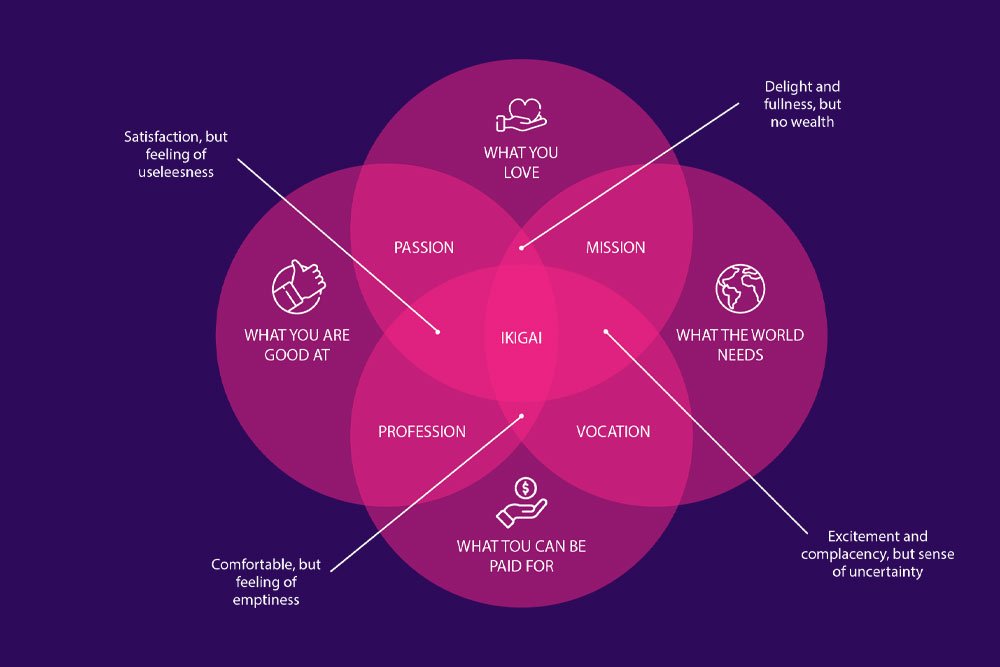
The Ikigai framework is represented as the intersection of four core elements:
- What you love – Your passion
- What you’re good at – Your profession
- What the world needs – Your mission
- What you can be paid for – Your vocation
When these elements overlap, you discover your Ikigai your unique reason for being. For students, finding Ikigai early in life fosters personal direction, reduces anxiety, and turns learning into a joyful, self-driven journey.
Why Students Need Ikigai
Many students experience confusion about their future, even after choosing specific courses or fields. With the constant race for high-paying jobs and top college admissions, students are often left questioning:
- Am I choosing the right career?
- Will this degree make me happy?
- What if I fail or change my mind later?
Ikigai helps answer these questions by shifting focus from external validation to internal alignment. It promotes self-awareness, clarity, and emotional well-being, making it a valuable tool in academic and personal development.
The Four Pillars of Ikigai for Students
Let’s explore how students can apply each component of the Ikigai framework to discover their ideal path:
1. What You Love (Your Passion)
This pillar is about identifying activities that bring joy and excitement. For students, this may include:
- Subjects you enjoy studying without being told
- Creative outlets like writing, music, or painting
- Activities that make time fly, such as helping others, coding, or debating
How to Explore It:
- Maintain a “Passion Journal” to track daily activities that spark interest.
- Experiment with different clubs, electives, and hobbies.
- Reflect on childhood interests and whether they still resonate.
2. What You’re Good At (Your Profession)
Passion alone isn’t enough you must also recognize your strengths and talents. Students should ask:
- Which subjects or skills do I excel at naturally?
- What do teachers, friends, or parents say I’m good at?
- Are there skills I enjoy improving over time?
How to Explore It:
- Take self-assessment quizzes (like SWOT or multiple intelligence tests).
- Participate in competitions, hackathons, or skill-based volunteering.
- Seek constructive feedback from mentors or educators.
Example: A student who loves writing and consistently scores well in English may explore journalism, scriptwriting, or content marketing as professional paths.
3. What the World Needs (Your Mission)
This component relates to a greater purpose contributing to society. Students should reflect on:
- Social or environmental causes they care about
- Problems they feel passionate about solving
- Fields where their skills can create impact
How to Explore It:
- Engage in community service, NGOs, or school-led social initiatives.
- Conduct research on global issues like climate change, mental health, or education.
- Participate in Model UNs or TED-Ed clubs to understand real-world challenges.
This aspect helps students move from self-focus to social contribution, a trait highly valued in the modern world.
4. What You Can Be Paid For (Your Vocation)
To turn your purpose into a sustainable career, students need to evaluate:
- Job opportunities aligned with their interests and skills
- Growing industries related to their fields of interest
- Emerging trends in the job market (like AI, sustainability, digital marketing)
How to Explore It:
- Attend career fairs, webinars, and workshops
- Talk to professionals through mentorship programs or LinkedIn
- Read about new-age career options and gig economy roles
By aligning interest with income, students can avoid the dilemma of choosing between passion and practicality.
Real-Life Example: Applying Ikigai in Student Life
Case Study – Rahul, 17, India
Rahul enjoys helping others understand concepts and often tutors his classmates. He’s good at math and communication. He volunteers at a local NGO teaching underprivileged kids. After exploring career options, he discovers a demand for educational content creators and online teaching.
Rahul’s Ikigai:
- Love: Teaching and explaining
- Good at: Math and communication
- World needs: Quality education
- Paid for: Online tutoring, EdTech, content creation
With this clarity, Rahul chooses to pursue a degree in education and digital media. He no longer studies for grades but learns to improve and align with his purpose.
Benefits of Ikigai for Students
Greater Motivation to Learn
When students see a purpose in what they study, they engage more deeply with the material.
Reduced Academic Stress
Ikigai promotes self-acceptance and personal alignment, helping students cope better with performance pressure.
Long-Term Vision
Rather than short-term achievements, Ikigai nurtures a deeper life plan that evolves with time.
Confidence in Decision-Making
Students become better at choosing subjects, internships, and career opportunities that align with their identity.
How Educators and Parents Can Support Ikigai Exploration
Students need guidance to discover their Ikigai. Here’s how schools and parents can help:
Create Safe Spaces for Exploration
Let students try different extracurriculars without fear of failure. Foster curiosity and flexibility.
Incorporate Personal Development Programs
Add workshops on self-awareness, strengths identification, and vision planning into the school calendar.
Encourage Open Dialogue
Talk about the emotional side of learning. Let students express doubts, fears, and dreams freely.
Connect Learning with Real Life
Invite professionals from various industries to speak about their career journeys and purpose.
Common Myths About Ikigai
| Myth | Reality |
|---|---|
| You can only have one Ikigai | Ikigai evolves over time with experiences and changing interests |
| You must monetize your passion | Not all passions need to be income sources—it’s about balance |
| Ikigai guarantees instant clarity | It’s a gradual journey of reflection, exploration, and learning |
| Only adults need to think about purpose | Ikigai is just as crucial for teens and young adults making life decisions |
Final Thoughts
The journey to discovering one’s Ikigai isn’t linear. It’s a process of exploring, experimenting, and evolving. For students, it’s about learning not just what to study or which career to pursue, but why any of it matters.
By embedding the Ikigai framework into the educational journey, we empower students to lead intentional, joyful, and impactful lives.
When students know their why, the how and what become infinitely clearer and far more fulfilling.
Quick Recap
- Ikigai is a Japanese concept meaning “reason for being”
- It lies at the intersection of passion, mission, vocation, and profession
- Students can discover their Ikigai through self-reflection, exploration, and guidance
- Benefits include greater clarity, motivation, resilience, and happiness
- Schools and parents play a crucial role in facilitating the Ikigai journey